Updated 6 October 2026. An evidence-informed guide for women from young adulthood into later life.
Resistance training can help you feel more capable in the gym and in everyday life. For one woman, success means her first confident deadlift. For another, it means carrying shopping, climbing stairs or getting up from a chair more easily.
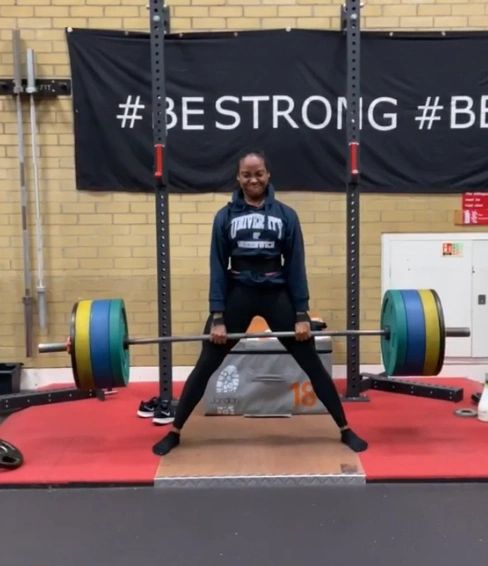
The photograph above celebrates one client’s strength. The wider reason to train is much bigger than a number on a bar: building and maintaining the physical capacity that supports the life you want to lead.
What can women gain from resistance training?
- Strength and muscle: a stronger foundation for daily tasks, sport and changing body-composition goals.
- Bone health: appropriately loaded exercise can help preserve or improve bone mineral density.
- Function and independence: greater capacity for activities that become more demanding with age.
- Support through life changes: training can be adapted around pregnancy, recovery after birth and menopause.
The evidence is strongest for improvements in strength and muscle, with important supporting evidence for bone and functional outcomes. Effects on particular symptoms, blood markers and long-term disease risk depend on the population and programme. [1] [2] [4]
Young women: build strength, skill and confidence
A systematic review of 24 studies found that resistance training improved upper- and lower-body strength and muscle size in healthy adult women. Women do not need to restrict themselves to very light weights or endless repetitions to benefit. The appropriate challenge depends on experience and goals. [1]
You can begin by learning manageable versions of movements such as a squat, hip hinge, push and pull. There is no requirement to attempt the lift in the photograph. Training should develop from your starting point, with enough practice to understand each movement and enough structure to recognise improvement.
Bone density: loading matters, but so does how you progress
A 2025 meta-analysis of 17 randomised trials in postmenopausal women found favourable effects of resistance training on bone mineral density at the spine, femoral neck and total hip. Results varied substantially between studies at some sites, so these averages are not a guarantee for an individual. [2]
The LIFTMOR randomised trial provides a useful example: 101 postmenopausal women with low bone mass took part in an eight-month study. Supervised, high-intensity resistance and impact training produced better bone-density and physical-function outcomes than a low-intensity home programme. The participants were screened, and the intervention was closely supervised. [3]
This supports appropriately prescribed loading; it is not an instruction to copy heavy lifting or jumping from the internet. Osteoporosis, previous fractures, pain and other conditions can change exercise selection. Bone-density improvements also do not automatically establish fewer fractures. Where necessary, training should be coordinated with your treating clinician.
Later life: train for the things you want to keep doing
Resistance training remains relevant in older age, including for people whose starting point is frailty or difficulty with everyday tasks. The NSCA position statement identifies benefits for strength, muscle, mobility and independence, with programmes adapted to the person’s ability and health. [4]
Useful goals may include rising from a chair, lifting a bag or managing stairs. The starting exercise might be a supported sit-to-stand or a machine-based movement. It does not have to look like a younger athlete’s workout to be worthwhile.
For an older woman, the aim is to build useful capacity progressively, while accounting for balance, medical history, medication and recovery. Age alone should not define the ambition, but it does not remove the need for individual assessment.
Perimenopause and postmenopause: support your health without hormone promises
Through the menopausal transition, resistance training offers a practical way to work on strength, muscle and bone health. The programme can be adjusted around symptoms, sleep and day-to-day readiness rather than assuming every woman needs the same routine.
Some symptom research is encouraging: a small randomised trial investigated resistance training for hot flushes. However, a broader review rated the evidence for several postmenopausal outcomes as low or very low certainty, and The Menopause Society’s 2023 position statement did not recommend exercise specifically as a treatment for hot flushes. That is different from advising against exercise for general health. [5] [6] [7]
Strength training should not be sold as a way to “balance your hormones”, restore premenopausal oestrogen levels or replace appropriate medical treatment. Its established physical benefits are valuable without those promises. Evidence from postmenopausal women also cannot simply be assumed to answer every question about perimenopause.
Body composition and cardiometabolic health
Building or retaining muscle can be a useful part of a body-composition plan. A review of 19 randomised trials also found average reductions in total cholesterol, LDL cholesterol and triglycerides with resistance training in postmenopausal women. Individual responses vary. [8]
These findings support resistance training as part of a broader approach that includes aerobic activity, nutrition and clinical care where needed. They do not mean that lifting guarantees weight loss, reverses diabetes or makes cholesterol medication unnecessary. The programme should fit your health needs as well as your preferences.
Tell me what you would like to improve—strength, body composition, confidence or everyday fitness.
During pregnancy: adapt the training to the pregnancy
ACOG recommends aerobic and strength-conditioning exercise for women with uncomplicated pregnancies, with clinical evaluation and appropriate modifications. Pregnancy does not automatically mean stopping all resistance exercise. Equally, a programme that suited you before pregnancy may need to change. [9]
Exercise selection, effort, positions and recovery should reflect your previous training, symptoms and advice from your maternity team. If there are medical or obstetric complications, that team should guide what is appropriate. Stop exercise and seek medical advice for warning signs such as vaginal bleeding, dizziness, chest pain or fluid leakage.
Much of the pregnancy evidence examines overall or combined exercise programmes. It would be misleading to credit resistance training alone with every reported pregnancy benefit, or to promise an easier labour. The goal is an appropriate, sustainable way to stay active.
After birth: rebuild gradually, without a deadline
Postnatal training should account for the birth, healing, pelvic-floor symptoms, sleep and energy availability. A calendar date alone does not establish readiness to lift heavily or return to running.
The 2025 Canadian postpartum guideline supports a gradual, individualised and symptom-led return to activity, including resistance exercise. It also recommends pelvic-floor muscle training and appropriate instruction. Evidence underpinning the guideline concerns a range of activity programmes, not just lifting weights. [10]
Gentle movement may be appropriate early, while progression to more demanding activity should respect wound healing and symptoms. Increasing bleeding, pelvic heaviness, leakage or persistent pain deserve assessment rather than pressure to push harder. A pelvic-health physiotherapist can help where needed.
The aim is to rebuild capacity for your life—including carrying and caring for your baby—not to rush a “bounce back”.
Longevity: promising associations, not extra years guaranteed
A systematic review of prospective cohort studies linked muscle-strengthening activity with lower all-cause mortality and several major disease outcomes. These were observational findings in adult populations, not trials proving that lifting extends a particular woman’s life. Other health behaviours and differences between participants may contribute. [11]
A more immediate reason to train is the opportunity to maintain strength and function as you age. That is a meaningful goal even without attaching a lifespan promise to it.
How to start—and why coaching can help
For generally healthy adults, ACSM’s 2026 guidance recommends training the major muscle groups at least twice weekly and progressing gradually. Bands, bodyweight, machines and free weights can all have a place. Pregnancy, recent childbirth, frailty or a medical condition may call for a different starting prescription. [12]
Knowing that resistance training is worthwhile does not automatically tell you which exercise to choose, how much to lift or when to progress. Those decisions become easier with a plan and feedback.
In my coaching, I can help you choose an appropriate starting point, practise technique, organise manageable sessions and review your progress. My MSc in Strength & Conditioning informs that process. Coaching supports exercise decisions; it does not replace maternity care, medical treatment or specialist rehabilitation.
Whether you are new to the gym or returning after time away, you do not need to arrive already strong. Tell me about your goals, training background and any relevant health considerations so we can discuss suitable support and any clinical input needed.
Discuss personal training in Rainham, Kent · Enquire about online coaching
Research and guidance
This article summarises selected systematic reviews, trials and professional guidance; it is not a new systematic review or an individual exercise prescription. The evidence differs by outcome and life stage. Links below let you examine the underlying research.
- Hagstrom et al. (2020). Strength and muscle growth in women: systematic review and meta-analysis.
- 2025 systematic review and meta-analysis. Resistance training and bone mineral density after menopause.
- Watson et al. (2018). LIFTMOR randomised controlled trial.
- NSCA (2019). Resistance training for older adults: position statement.
- Berin et al. (2019). Resistance training for hot flushes: randomised controlled trial.
- 2022 systematic review and meta-analysis. Resistance training for postmenopausal women.
- The North American Menopause Society (2023; now The Menopause Society). Nonhormone therapy position statement.
- 2023 systematic review of randomised trials. Resistance training and blood lipids in postmenopausal women.
- ACOG (2020). Exercise during pregnancy and the postpartum period: Committee Opinion 804.
- 2025 Canadian guideline. Physical activity, sedentary behaviour and sleep in the first year postpartum.
- Momma et al. (2022). Muscle-strengthening activity, disease risk and mortality: meta-analysis of cohort studies.
- ACSM (2026). Official summary of the resistance-training position stand.